
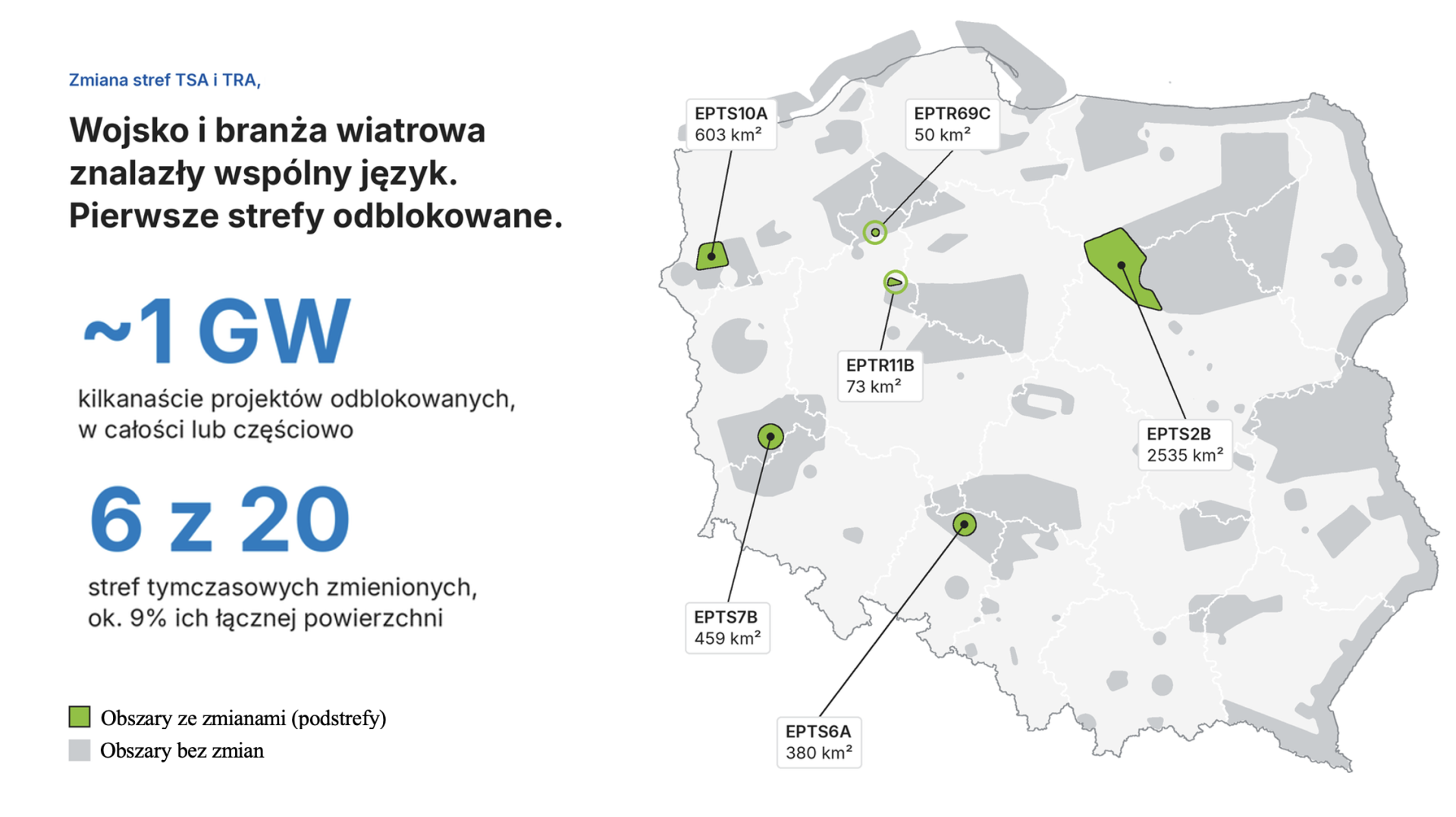
A dozen or so onshore wind farm projects with a combined capacity of nearly 1 GW once again have a chance to move forward. This follows a decision taken by the Ministry of National Defence. Changes introduced in six temporary airspace zones will enable wind farms to be developed. The decision is the result of months of analysis and consultations conducted jointly by the military and investors affiliated with PSEW. The conclusion is simple: the defence sector and the wind energy industry can engage in constructive dialogue, and that dialogue can lead to concrete decisions.
Temporary airspace zones (TSA and TRA) are used by the Armed Forces for training and aviation operations. Many of them extend from ground level upwards. In practice, this means that locating wind turbines within these zones is significantly restricted or, in some cases, impossible. Since 2024, the industry has seen a growing number of projects encounter investment barriers at this stage. Military zones currently cover more than half of Poland’s territory and, together with other siting restrictions, significantly reduce the areas available for the development of new wind farms.
In an earlier article on this blog, we highlighted the need to move away from a binary approach in favour of assessing projects individually. Today, we can present the first results of this approach.
Changes Introduced in June 2026
“The military and the Armed Forces will help facilitate the development of energy independence,” Deputy Prime Minister Władysław Kosiniak-Kamysz said during the PSEW2026 Conference, announcing regulatory changes long awaited by the wind industry that would open up new areas for investment within military airspace zones. The announcement is the result of dialogue between the wind energy sector and the Ministry of National Defence.
“It is an absolute priority for our government to build energy capacity in Poland, both onshore and offshore, that ensures our independence and makes us immune to any form of international pressure. We will then be dependent on neither the East nor the West, and we will not have to struggle to secure supplies under difficult circumstances,” said Deputy Prime Minister and Minister of National Defence Władysław Kosiniak-Kamysz.
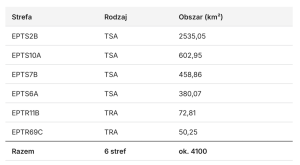
Following the decision of the Ministry of National Defence, the rules governing the use of airspace were modified in selected parts of four TSA zones and two TRA zones. The change does not abolish these zones. Instead, it designates areas (sub-zones) in which restrictions on the siting of wind turbines have been eased, while maintaining the requirements related to security and the performance of Armed Forces missions.
Each of the changes introduced preserves the overriding priority of national defence requirements. This does not mean abandoning military requirements, but rather tailoring them more precisely to actual operational needs and local conditions.
The 9 Percent That Changes the Narrative
The areas covered by the changes were not selected at random. The Ministry of National Defence decided to ease restrictions primarily in locations where planned investments had previously received positive opinions or approvals, or where siting decisions or grid connection conditions had been issued confirming that the projects could proceed. In other words, these were projects already at an advanced stage of development.
As a result, a dozen or so projects with a combined capacity of nearly 1 GW have been unblocked, either partially or in full.
Of the 20 temporary zones currently in force, six were affected by the changes. The areas in which the lower boundary has been raised account for approximately 9 percent of the total area of all temporary zones. This share will decrease in relative terms as the military takes steps to designate additional zones.
The scale of this first stage of easing restrictions for onshore wind is therefore limited. More important, however, is what this decision demonstrates. Over the past two years, a narrative of conflict has become entrenched in the public debate: the military blocks wind energy, while investors fail to understand defence requirements. This decision challenges that stereotype. It shows that a thorough, data-driven analysis of specific locations, conducted in good faith by both sides, can lead to solutions acceptable to all parties.
The analyses also indicate that there is scope for further review of the restrictions currently in force. Wherever easing restrictions does not compromise national defence and security requirements, it is worth revisiting them. The industry has taken the first step. The next steps should follow the same model: shared data, clear criteria and a permanent channel of dialogue between the Ministry of National Defence and the industry.